

The Foundation Exam Reference Booklet
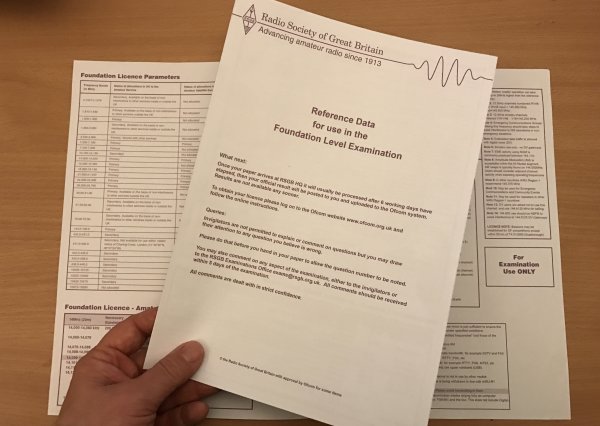
When you take your Foundation exam, you are allowed to use the official four-page Foundation Examination Reference Data booklet (EX307).
We recommend downloading a copy now and using it throughout the course. Some exam questions require you to find information from the booklet, so getting familiar with it before your exam is important.
Download the EX307 bookletDownload Foundation Examination Reference Data (EX307) This is the reference booklet for Foundation exams. You can also find the latest examination paperwork on the RSGB website. |
What’s in the booklet?
You don’t need to memorise everything in EX307. The important thing is to understand the information it contains and know where to find it when you need it.
Foundation licence parameters
This table shows the frequencies available to UK Foundation licence holders, together with important notes and restrictions. We’ll cover these in Module 6 – Licence Conditions.
Amateur radio band plans
You’ll find sample band plans for the 20m and 2m bands. These show how different parts of an amateur band are normally used. We’ll look at these in Module 6 – Licence Conditions.
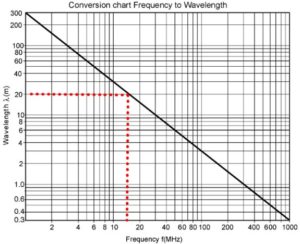
Frequency and wavelength conversion chart
This chart helps you convert between frequency in MHz and wavelength in metres. You’ll learn how to use this in Module 2 – Technical Basics.
Frequency allocation table
This table shows some of the other users of the radio spectrum between 87.5MHz and 160.975MHz.
How to use EX307
This short video takes you through the booklet and explains how to find the information you may need in the exam.
Get used to using it
Keep EX307 handy while you’re working through the course. When we cover something that’s included in the booklet, take a moment to find it for yourself.
This is particularly useful for:
- checking which amateur bands Foundation licence holders can use
- reading the notes and restrictions associated with particular bands
- using the 20m and 2m band plans
- converting between frequency and wavelength
- looking up frequency allocations
The aim isn’t to memorise the booklet – it’s to become comfortable finding the information quickly.
Printing and accessibility
It’s useful to print a copy if you can, particularly if you expect to use a printed copy in your exam. If you don’t have a printer, a friend, family member, workplace, local amateur radio club or local print shop may be able to help.
If you find the standard booklet difficult to read, viewing the PDF on a screen allows you to zoom in. Your printer’s higher-quality setting may also make small text clearer.
If you need accessible examination material, including larger-print paperwork, contact the RSGB exams team before your exam to discuss your requirements.